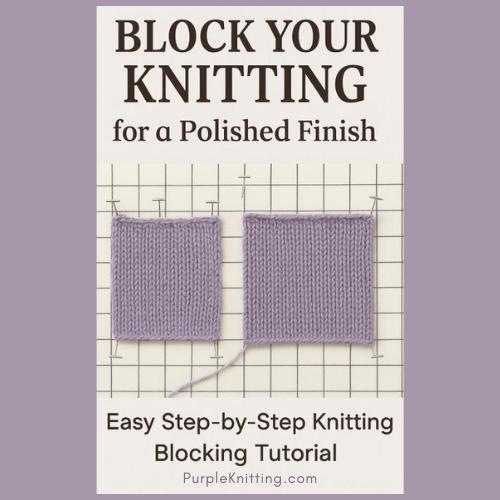
You’ve cast off, sewn in your ends, and admired your completed project, so you think you are finished, right? Well, in a sense, yes. However, there’s one more step that can take your knitting from looking “homemade” to truly “handcrafted”: blocking. In this beginner’s guide, you’ll find out how to block knitting and why you should be doing it.
If you’ve ever wondered why your stitches don’t look as even as they did in the pattern photos, or why your project isn’t quite the size you expected? Blocking is the secret ingredient. And don’t worry, it’s much simpler than it sounds.
What Is Blocking?
Blocking is the process of using water, steam, or mist to gently shape and set your knitted fabric. Think of it as giving your project a nice spa treatment. It relaxes the fibres, evens out the stitches, and helps everything settle into place. After the wetting you set the knitted fabric in the shape that you want it to be, and it dries maintaining that shape.
Why Should You Block Your Knitting?
- Smooths and evens stitches – No more bumpy rows or uneven tension.
- Enhances stitch definition – Lace looks crisp, cables pop, and colourwork evens out.
- Sets the right size and shape – Perfect for garments where measurements matter.
- Makes finishing easier – Seaming and assembly are so much simpler when pieces are neat and flat.
- Gives a professional look – Your knitting will look polished and store-bought (in the best way).
When to Block your knitting
For the most part, you will block knitting once you have cast off and sewn in the ends. If you are doing a fitted garment like a jumper, it is best to block each of the knitted fabric parts so that you get them all matching ie the sleeves the same and the two fronts, etc. When you knit toys, they also have many parts to them too. So you will want them to be blocked to the correct shape. This will help ensure that the seams you make are the best they can be.
Different Methods of Blocking
There’s more than one way to block, and the method you choose depends on the fibre and project:
- Wet Blocking – The classic method. Soak the project in water, gently remove excess moisture, shape it, and let it dry.
- Steam Blocking – Use steam from an iron or steamer to relax fibres. Best for wool blends and sturdy fibres.
- Spray Blocking – Lightly mist with water, shape, and leave to dry. Good for delicate yarns that shouldn’t be fully soaked.
- Special Cases – Some fibres, like acrylic, don’t respond well to traditional blocking. For those, a light steam treatment (often called “killing” acrylic) can work, but be cautious.
Step-by-Step: How to Wet Block Knitting
Wet blocking is the most common method and works well for most natural fibers like wool, alpaca, and cotton. Here’s how to do it:
- Soak your project
Fill a basin with lukewarm water and gently submerge your knitting. Let it soak for about 15–20 minutes so the fibers can fully relax. Read the label of the yarn to make sure that what you are doing to it is supported by the instructions on the label. - Remove excess water
Carefully lift the project out (supporting its weight so it doesn’t stretch). Gently squeeze out extra water by gently pressing it together between your palms and without wringing. Roll it up in a towel and press to remove more moisture. Let the fibres of the towel draw out the moisture. Never rub or wring out the knitted fabric. - Lay it flat
Place your knitting on a blocking mat, bed, or a clean towel laid out on a flat surface. - Shape and pin
Smooth the fabric into the desired shape. Use rust-proof pins or blocking wires if you need straight edges or sharp points (especially for lace). - Let it dry completely
This can take anywhere from a few hours to a day, depending on the thickness. Don’t rush, make sure it’s fully dry before unpinning.
Tips for Successful Blocking
- Use rust-proof pins so you don’t end up with marks.
- Block each piece before seaming when working on garments.
- Always check yarn labels—some blends may be sensitive to heat or water.
- Be gentle. Overstretching can permanently distort your knitting.
Projects knitted in the round
When you need to block projects that have been knitted in the round, such as beanies, and socks you need to be careful so that you don’t get a crease at the fold line. Instead, use specially designed sock blockers – they do come in different sizes. For other items, for example, beanies, you can use foam backer rods. Just place them in the folded areas and pin through them.
Common Mistakes to Avoid
- Pressing with an iron – This can flatten stitches and ruin the texture.
- Blocking in a damp room – Your project may not dry properly and could develop mildew.
- Careful with hems or ribbing – don’t overstretch them as they do not springback – they need to keep their stretchiness.
- Skipping blocking altogether – You’ll miss out on the polished finish!
Watch this video that demonstrates the wet blocking method.
Final Thoughts
Blocking is one of those magical finishing steps that transforms your knitting. It takes just a little time, but the results are huge—crisper stitches, smoother fabric, and a piece that truly looks like it came from the pages of a knitting magazine.
Next time you cast off, give your project the treatment it deserves. You’ll be amazed at the difference it can make.